Lawn Mowers
Commercial Lawn Mowers for Landscaping Businesses: Walker, Scag, and Wright
· Updated
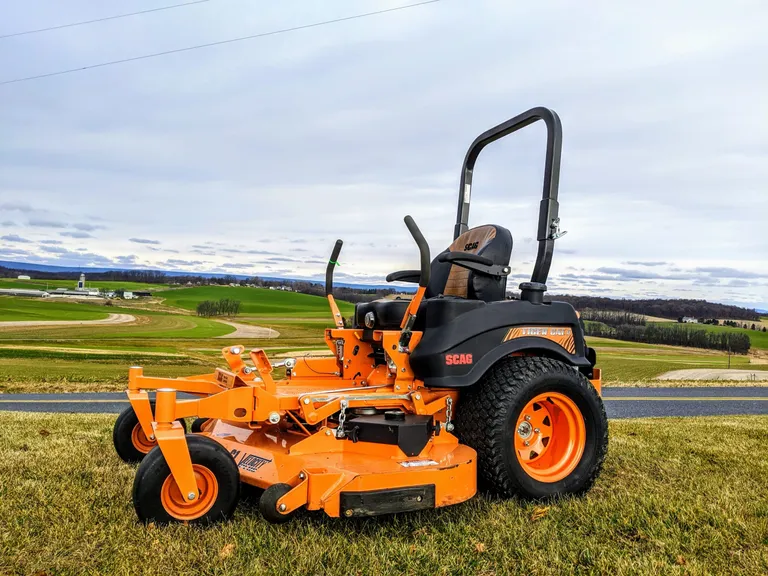
A commercial mower is the most expensive tool a lawn care crew owns, and the one that earns the most hours. Choose the wrong one and it costs you twice: once in the purchase price, and again in every hour you spend on a machine that does not suit the properties you actually mow.
This guide began in 2023 as a brand overview and was rewritten in October 2026. It does not rank mowers, and it does not rest on our own testing: we do not sell, test or take referral money from any of these manufacturers. It describes three well-known commercial lines, then gives you the questions and the arithmetic that decide which machine fits your routes. Models and specifications change from year to year, so check each manufacturer’s current specification sheet before you buy.
Start with your properties, not the brand
The right mower is the one that fits the work you already have. Before you compare any brand, answer six questions:
- How big are your typical lots? A wider deck covers more ground per pass on open turf, but only if the property lets you use it.
- How narrow is your narrowest gate? Measure it. A deck that does not fit through the gate means a second, smaller machine or a hand-mow.
- How steep is the ground? Every manufacturer publishes slope guidance for each model. Stay inside it, and treat slopes as a reason to demo before you buy.
- Stand-on, ride-on or walk-behind? Walk-behinds suit small or tight properties. Stand-on mowers are compact and quick to get on and off, which helps crews that make many short stops. Ride-on zero-turn mowers give the operator a seat, which tends to help on large open properties where comfort over a long day matters.
- How many hours a year will it run? A machine that runs 700 hours a year is a different purchase from one that runs 150.
- Who services it? A mower down in June costs more than any spec sheet saves. Ask the dealer about parts on the shelf and how long a repair takes.
What each of the three is known for
These are three commercial lines landscapers commonly consider. They are listed alphabetically, not ranked.
Scag
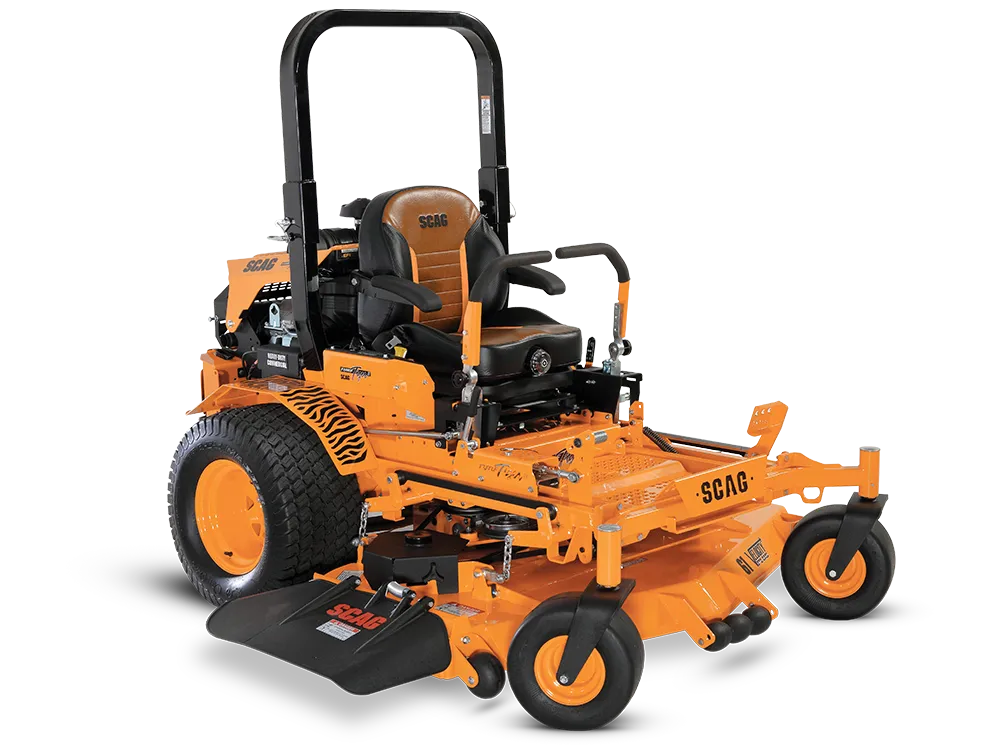
Website: www.scag.com (opens in a new tab)
Scag makes commercial-duty equipment across the formats above: walk-behinds, stand-on mowers and ride-on zero-turn models. That breadth is the main reason to look at the line, because a company with different kinds of property can sometimes find every machine it needs from one manufacturer and one dealer. The stand-on V-Ride and the ride-on Turf Tiger and Cheetah lines are worth a look. Check the current model names, deck sizes and engine options on the specification sheets, because they change.
Walker
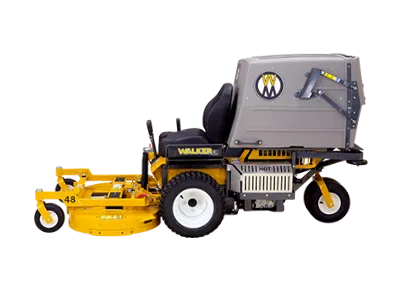
Website: www.walker.com (opens in a new tab)
Walker is best known for its out-front deck design: the cutting deck sits in front of the operator, so you can see the cut and trim close to obstacles, and the machine turns in place. Walker also sells a range of attachments for other seasonal work, so a mower can double as a tool for off-season tasks. Confirm which attachments are offered for the specific model you are considering. Walker’s lineup covers different property sizes and terrain, so compare its models against your answers to the six questions above.
Wright
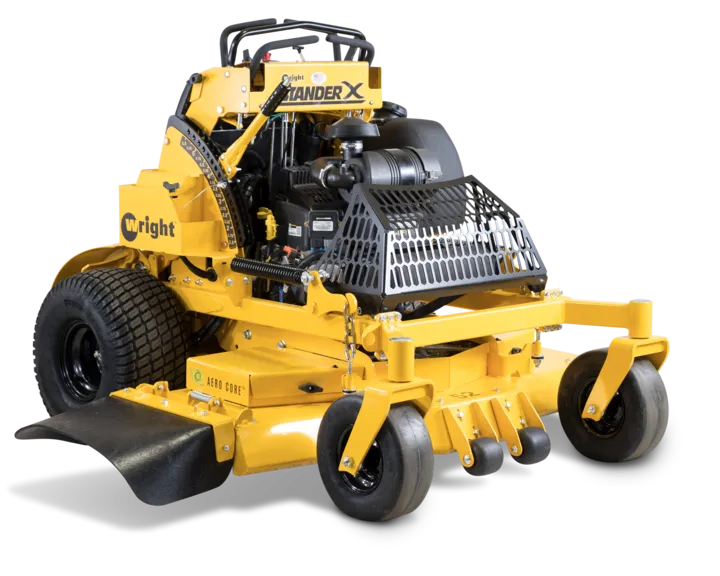
Website: wrightmfg.com (opens in a new tab)
Wright is best known for its stand-on mowers, the Stander line, where the operator rides on a platform instead of sitting. The format is compact, which helps with tight yards, gates and trailer space. Wright also makes walk-behind models. As with the others, look at the current specification sheets for deck sizes, engine options and the slope guidance for each model.
What a mower really costs per hour
The sticker price is only one line. The number to compare between machines is the cost per hour of running it, and you can work it out with four lines:
| Cost line | How to work it out | Example per hour |
|---|---|---|
| Depreciation | (purchase price minus resale value) divided by total hours | $3.33 |
| Fuel | fuel used per hour times your fuel price | $4.00 |
| Maintenance and repairs | blades, belts, oil, tires and shop time, per hour | $2.50 |
| Insurance and storage | the yearly cost divided by hours run in a year | $0.60 |
| Total | $10.43 |
The example is made up: a $12,000 mower resold for $5,000 after three years and 2,100 hours gives $7,000 divided by 2,100, or $3.33 an hour of depreciation. Use your own purchase price, fuel use and repair history.
Then ask what a faster machine is worth. Say a wider deck saves 6 minutes on each of 10 large properties you mow every week for 30 weeks. That is 10 x 30 x 6 = 1,800 minutes, or 30 hours. At a loaded crew cost of $60 an hour (an example figure; use yours), that is $1,800 a year. That is the most the faster deck is worth to you, whatever the spec sheet says. If the price difference is larger than what the saved hours can repay over the life of the machine, the cheaper mower is the better buy for your routes.
Equipment cost is one input to what you charge. Our lawn mowing pricing guide turns your costs and your route density into a price per visit.
Before you buy
- Demo the machine on your hardest property, not the easiest one.
- Check the dealer’s parts stock and repair turnaround, and ask who loans a machine while yours is in the shop.
- Confirm the deck fits your narrowest gate and the mower fits your trailer with room for the rest of the equipment.
- Check the manufacturer’s slope guidance against your steepest properties.
- Work out the cost per hour above for your two finalists.
- Decide when to buy: winter is when you have the time to demo machines, and the off-season plan lists what else to finish before the first mow.
- Add the new machine to your lawn care equipment checklist so it is serviced on a schedule from day one.
Where we fit
We make landscaping business software, not mowers, and picking a mower does not need any of it. Where software helps is afterward: once the machine is on the route, the question that matters is how long each property takes. Our guide to scheduling landscaping crews covers recording visits and checking whether a day actually fits, and scheduling and routing is included on every plan.
Frequently asked questions
Should a landscaping business buy a stand-on or a ride-on zero-turn mower?
It depends on the properties. Stand-on mowers are compact and quick to get on and off, which suits tight lots and crews that make many short stops. Ride-on zero-turn mowers give the operator a seat and tend to suit large open properties where comfort over a long day matters. Demo each on your hardest property before deciding.
How do I work out what a commercial mower costs per hour?
Add depreciation (purchase price minus expected resale value, divided by expected hours), fuel, maintenance and repairs, and insurance and storage, each as a cost per hour. The cost per hour, not the sticker price, is the number to compare between machines.
What is the best commercial mower brand?
There is no single best brand. This guide describes three well-known commercial lines and does not rank them, because the right machine depends on lot size, terrain, gate widths and how many hours it runs. Check each manufacturer current specification sheet and demo before you buy.